
Creating a Generational Portrait Tradition That Lasts 100 Years
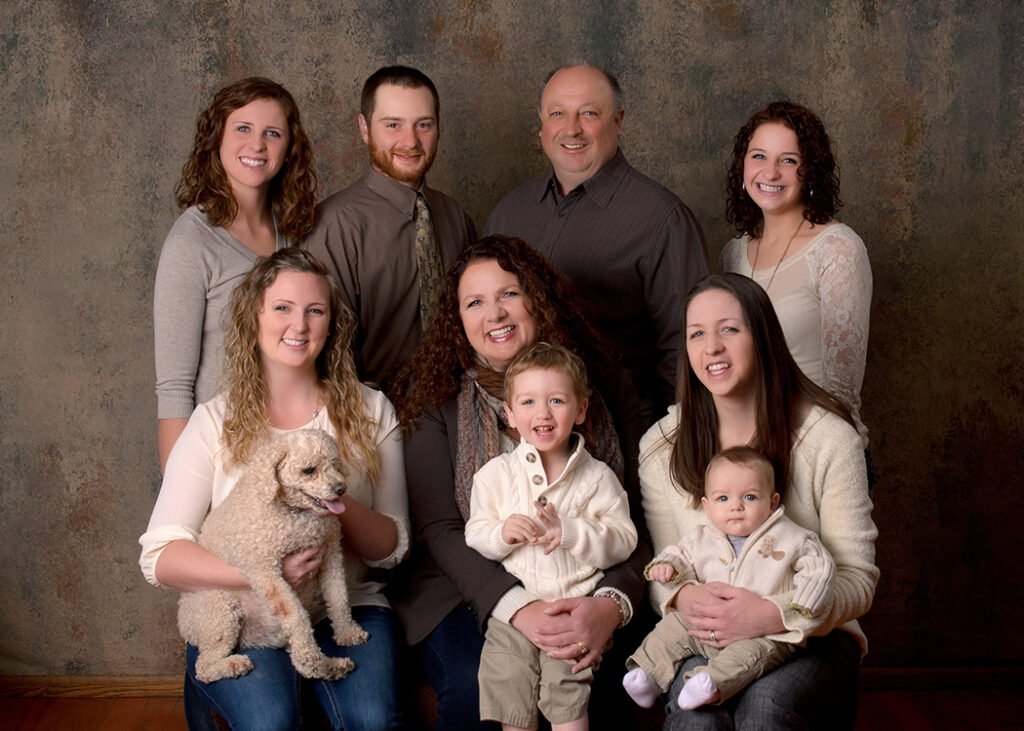

Some of the most meaningful conversations I have don’t happen at the beginning of a session. They happen at the end, when a family is looking at the portraits on my monitor and someone says, quietly, “My grandmother would have loved this.”
That’s when I know the portrait is going to matter.
I’ve been photographing families in the Twin Cities for over forty years. In that time, I’ve worked with families across three and sometimes four generations. I’ve made portraits of grandparents who are now gone, and I’ve watched their grandchildren — people who never met them — grow up knowing exactly what they looked like.
That’s what a portrait tradition does. It extends the visual memory of your family beyond any one lifetime.
What a Tradition Actually Is
There’s a distinction I want to make, because I think people sometimes confuse a tradition with a rule.
A portrait tradition isn’t a rigid schedule. It’s not “every year, same month, same studio, no exceptions.” It’s a shared understanding within a family that portraits matter — that showing up to be photographed together is something you do, the way some families always gather for a particular holiday or always mark certain milestones the same way.
The families I’ve photographed across multiple generations didn’t have a contract with me. They had a habit of mind. Someone, usually a parent or grandparent, decided early on that family portraits were important. They made the first appointment. They came back. And over time, it became simply what the family did.
That first appointment is everything. The tradition doesn’t exist until someone decides to start it.
What Makes a Portrait Worth Keeping for 100 Years
I’ve been thinking about this question for most of my professional life.
The portraits that survive — the ones that get framed, passed down, restored when they start to fade, and hung in the next generation’s living room — have a few things in common.
They look like the people in them. This sounds obvious, but it’s not. A portrait where someone looks uncomfortable, over-posed, or unlike themselves in any way tends to get put in a drawer. The portraits families keep are the ones where their grandmother is recognizable as herself — her expression, her bearing, the way she held her hands.
They’re made with quality materials. A portrait printed on archival paper and properly framed can last a century. A print from a chain photography studio on standard photo paper will fade in a decade, sometimes less.
And they’re made by someone who understood what they were making. Portrait photography at this level isn’t just technical — it’s a conversation. Forty years of experience means I know how to read a room, how to put people at ease, how to wait for the moment that actually represents a family rather than just documents them.
How to Start If You Haven’t Yet
The most common version of this conversation I have goes something like this: someone in their forties or fifties comes in, usually for a portrait related to a specific occasion, and says some version of, “I wish we’d started doing this earlier.”
If you’re reading this and you’re in your thirties or forties with children still at home, I’d tell you: now is exactly the right time. Not next year, not when the kids are older, not when everyone can coordinate schedules. Now.
Here’s why timing matters. The portrait you make today captures something specific: your family as it is right now. Children at their current ages. Parents at their current ages. Grandparents, if they’re still with you, as they are right now. That portrait will not be available to make in five years. A different portrait will be available — a good one — but not this one.
The portrait tradition you build is really just a series of those moments, documented and preserved. Each one captures something irreplaceable.
The Role of the Oldest Generation
If you have living grandparents or great-grandparents, they are the anchor of the tradition you’re trying to build.
Not just emotionally, though they are that. Practically speaking, they are the visual connection between the family’s past and its future. A portrait that includes four generations — great-grandparent, grandparent, parent, child — is the kind of image that gets passed forward for a hundred years. I know this because I’ve seen it happen.
I’ve written separately about making a portrait before a grandparent passes and what that specifically looks like. But in the context of a tradition, the point is this: the window for that multi-generational portrait is finite. Building the tradition while all four generations are present is the best opportunity you’ll have.
Keeping the Tradition Going
Traditions require stewardship. Someone in the family has to care enough to keep them alive.
In my experience, the tradition usually passes from one person to the next the same way — through presence. The child who grew up understanding that family portraits mattered becomes the adult who makes the appointment. Not because they were told to, but because they absorbed it.
This is, in its own way, part of what you’re passing down. Not just the images, but the habit of making them.
I’d suggest making the portraits part of your broader photo legacy — a deliberate record of your family that includes not just the portraits, but the names, dates, and stories attached to them. A portrait on the wall is powerful. A portrait with context is something a great-grandchild can actually understand.
And when the portraits are made with permanence in mind — printed on archival paper, properly framed, stored correctly — they’ll still be visible when the people in them are long gone.
What 40 Years Taught Me
I’ve made a lot of portraits. And I’ve watched a lot of them become something more than photographs — become the visual memory of a family, the thing people point to when they want to explain who they are and where they came from.
The families who have that aren’t different from other families. They just made a decision, early on, to keep showing up.
If you’re thinking about starting that tradition, or continuing one that’s been interrupted, I’d be glad to talk through what it looks like. We’ve been in Eden Prairie since 1983, and this is the work I care most about.
Related Reading
- The One Portrait Every Family Should Take Before a Grandparent Passes
- The Photos Your Grandchildren Will Never See
- Photo Legacy
The session itself is the easy part. The hard part is deciding it’s time. If you’re reading this, you’ve probably already decided. You can reach us at (952) 400-1020. We’re in Eden Prairie and we’ve been doing this since 1983.